Amcor: Partnering with industry to innovate plastic recycling
The challenge
The flexible packaging industry employs 25,000 people in Wisconsin and plays a crucial role in the state’s economy. However, flexible packaging materials are not recyclable with current methods, creating significant waste. Amcor, the world’s largest packaging producer with U.S. headquarters in Neenah, Wisconsin, along with other companies, sought innovative ways to recycle their waste while maintaining the quality of their materials. With limited capacity to focus on long-term research, industry has turned to UW–Madison for help.
The solution
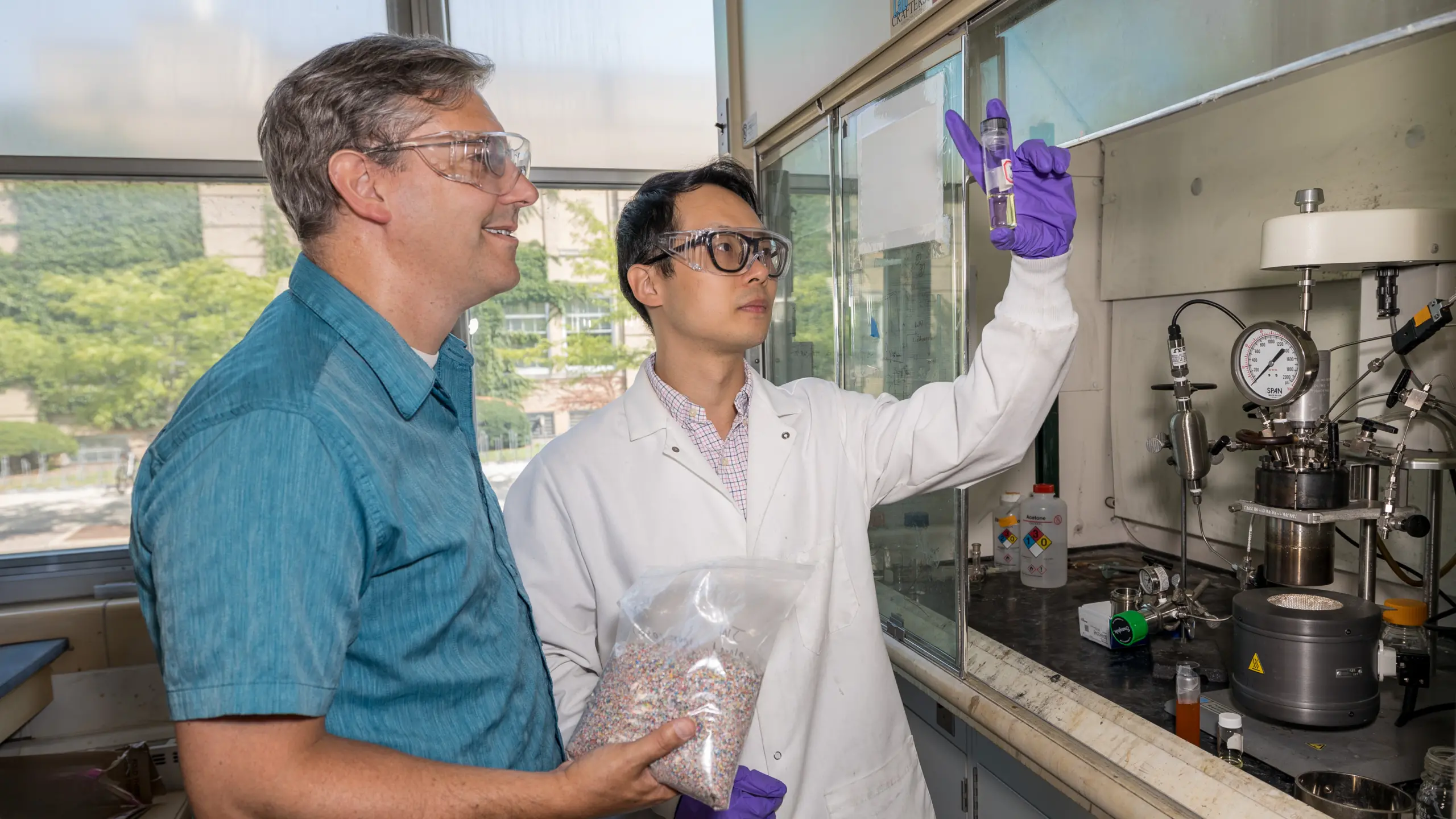
George W. Huber, the Richard L. Antoine Professor in UW–Madison’s Department of Chemical and Biological Engineering, led a team at the Center for Chemical Upcycling of Waste Plastics (CUWP) to develop a solvent-based recycling process for flexible packaging materials. The process, successfully demonstrated in the lab, converts waste materials into high-quality resins to produce new flexible packaging materials.
Amcor and other industry partners provided waste materials for testing, which UW–Madison researchers processed and returned as high-quality resins. Although the lab-scale process produced small quantities, the CUWP designed a pilot system capable of scaling up to 25 kilograms per hour. A planned facility in Green Bay will further increase production to 500 kilograms per hour, demonstrating the feasibility of closed-loop recycling on a commercial scale.
Quick Facts
Amcor
Company: Amcor
U.S. headquarters: Neenah, Wisconsin
Industry: Flexible Packaging
Employees: 40,000+ globally
Global presence: Operates in more than 40 countries
Focus: Sustainable packaging solutions for food and other consumer goods

Impact and results
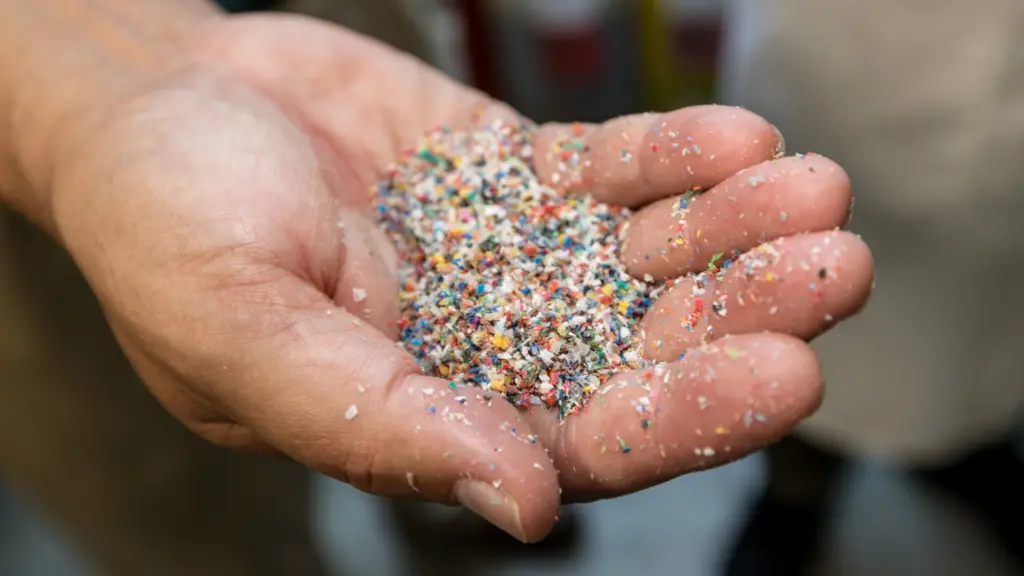
By successfully creating a solvent-based recycling process, the collaboration laid the groundwork for a more sustainable approach to flexible packaging waste. With the planned Green Bay facility, this technology has the potential to transform the recycling industry, turning waste into valuable resins while reducing environmental impact.
Amcor has already validated the quality of UW–Madison’s recycled resins, which meet the high standards required for flexible packaging. The collaboration has also fostered significant economic potential by leveraging Wisconsin’s existing industrial infrastructure, positioning the state as a leader in sustainable packaging solutions. The commercial-scale facility, targeted for completion in 2026-2027, will create opportunities for local industries to adopt these advanced recycling methods.
[Many] companies can’t do research that’s five or more years out because they’re looking quarter to quarter. Industry can’t focus on this right now—their profit structure doesn’t allow them to do that—but we can at the university.
A multi-faceted partnership
The university’s interdisciplinary expertise in chemical engineering, mechanical engineering, and related fields allowed researchers to address the technical challenges of recycling flexible packaging. Students were deeply involved in the project, working alongside industry partners to analyze materials and refine processes, gaining invaluable real-world experience.
UW–Madison also provided critical support for commercialization, including intellectual property protection through the Wisconsin Alumni Research Foundation (WARF) and business development resources from programs now housed in the Wisconsin Entrepreneurship Hub. CUWP is a multi-university center funded by the Department of Energy based at UW–Madison.
Looking ahead
The partnership between UW–Madison, Amcor and other flexible packaging companies exemplifies how academia and industry can work together to solve pressing environmental and economic challenges. With scalable technology and a clear path to commercialization, this collaboration has the potential to revolutionize the recycling of flexible packaging materials, creating a sustainable future for the industry.